Yuntong (Tianjin) Industrial Co., Ltd.
-
+8613682051821
-
sales@ytsmartcam.com


SHS RHS
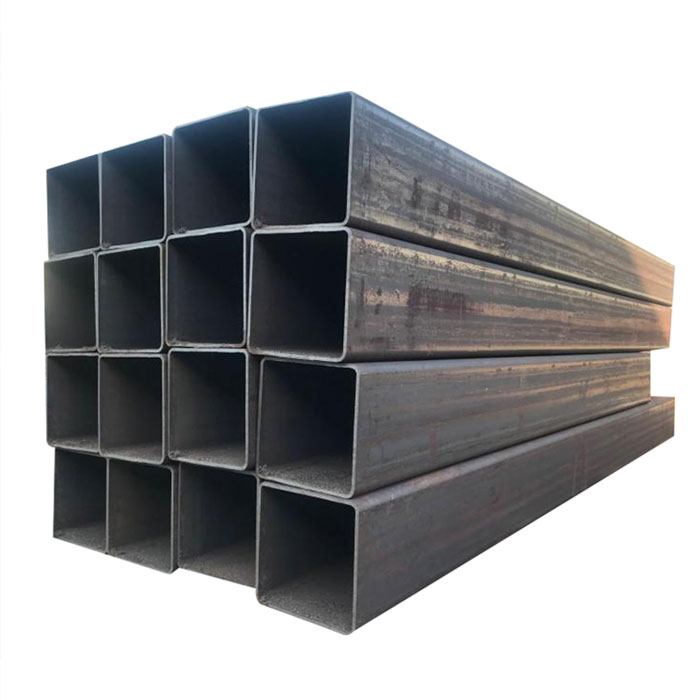
SHS — Square Hollow Section
SHS stands for Square Hollow Section. It is a structural steel tube with a square cross-section, meaning all four outer sides are of equal length (B = B). The profile is hollow inside, with a uniform wall thickness t on all sides.
Key features:
- Equal-sided symmetry — the cross-section is a perfect square, giving identical section properties about both principal axes (strong and weak axes are the same).
- Uniform strength in all directions — because of the symmetric shape, SHS resists bending and buckling equally in both the x and y directions.
- Clean appearance — the square profile offers a modern, neat aesthetic, widely used in architectural applications where the steel is exposed.
- Easy to connect — flat surfaces make welding, bolting, and joining to other members straightforward.
Typical applications: columns, beams, bracing members, space frames, handrails, architectural façades, and machinery frames.
RHS — Rectangular Hollow Section
RHS stands for Rectangular Hollow Section. It is a structural steel tube with a rectangular cross-section, where the width B and depth D are different (B ≠ D). Like SHS, it is hollow with uniform wall thickness.
Key features:
- Directional strength — because one dimension is larger than the other, RHS has a distinct strong axis (the deeper direction) and weak axis. This allows engineers to orient the section to resist higher bending moments in one direction.
- Higher moment capacity in one direction — for the same amount of steel, an RHS oriented with its deeper axis in the direction of the load can carry more bending moment than a comparable SHS.
- Efficient for floor beams — the rectangular shape closely matches the loading pattern of typical floor beams, where vertical loads dominate.
- Flat surfaces for connections — same advantage as SHS, but with more design flexibility due to the two different dimensions.
Typical applications: floor beams, roof purlins, lintels, portal frame rafters, bridge components, and anywhere directional bending strength is needed.
Comparison summary
| Property | SHS (Square) | RHS (Rectangular) |
|---|---|---|
| Cross-section shape | Square (B = B) | Rectangle (B ≠ D) |
| Axis symmetry | Equal in both axes | Strong axis ≠ weak axis |
| Bending resistance | Equal in all directions | Higher in the deeper direction |
| Best use case | Columns, symmetric loading | Directional beams, floor systems |
| Aesthetic | Uniform, modern look | More versatile proportions |
In short: Both SHS and RHS belong to the family of hollow structural sections (HSS). The fundamental difference is that SHS has equal sides (a square), providing uniform strength in all directions, while RHS has unequal sides (a rectangle), allowing engineers to optimize strength along a preferred axis. The choice between them depends on the loading direction, connection requirements, and aesthetic goals of the project.
展示详情